

What an industrial dryer is for: operation, applications, Vismec solutions
What is an industrial dryer for, and what are its fields of application? In production processes, moisture control allows ensuring the quality of processed materials, production efficiency and a successful final outcome.
Therefore, in many sectors, a proper drying dehumidification prevents defects, reduces processing times, and preserves the longevity of products durability. We are going to talk about it in this piece, explaining the operation and purpose of an industrial dryer, with a focus on the plastics sector and on the cutting edge solutions offered by Vismec.
What is an industrial dryer for?
An industrial dryer is a device designed to remove moisture from the air or materials used in production processes. It works by reducing the water vapour and ensuring that materials are dry and ready to be processed, avoiding moisture negatively impact the process or the final product. This type of machinery is used in various situations where a controlled working environment is essential for successful production.
The operation of an industrial dryer is based on several technologies, some of which are more obsolete and others decidedly more advanced. The choice of the method to reach the best result depends on various factors, such as the type of material, its shape and density, and the expected performance of the process. Here are some of the most used dehumidification methods in industry.
- Drying ovens: a discontinuous and obsolete method that exposes the object or material to be dried to the agents of the surrounding environment, with potential risks of contamination and deterioration.
- Hot air drying: continuous drying system with high energy consumption. Furthermore, environmental conditions significantly influence the process.
- Compressed air drying: a method that uses clean, dry compressed air but requires high consumption and costs, making it suitable only for productions.
- Infrared rays: a fast, continuous process suitable only for large volumes of material, with high costs both in technology acquisition and in energy consumption.
- Dryers with vacuum technology: a method that uses pressure variations to lower the boiling point of water and decrease moisture, reducing drying times and energy consumption.
- Molecular sieve dehumidification: a continuous process with high energy consumption. However, as it is a closed-loop technology, the dehumidification is not affected by environmental conditions.
- Honeycomb sieve wheel dryers: a new generation of dehumidifiers which are more efficient and require a lower maintenance than traditional molecular sieves. These are the industrial dryers designed and manufactured by Vismec.
The question, "What is an industrial dehumidifier for?” does not have a single answer, as its fields of application are numerous. In the food industry, for example, moisture control prevents the growth of mould and bacteria, maintaining products' suitability to be consumed. In the pharmaceutical industry, it helps to preserve the stability of active ingredients and the safety of medicines.
In the electronics industry, drying protects sensitive components from moisture, preventing malfunctions or short circuits. In the metallurgy sector, excessive moisture can lead to rust and compromise the quality of finished products. So, a good drying is definitely necessary.
In the plastics processing industry, the use of dryers is particularly important. So, in the next section we will outline why, and we will focus on the characteristics and operation of Vismec’s wheel dryers dehumidifiers for plastic granules.
Focus on the plastics industry: Vismec dryers
Even in the plastics industry, the granules drying is crucial to ensure the quality of the finished product. Polymers, indeed, tend to absorb moisture from the environment; inadequate drying can compromise subsequent production processes, causing defects such as bubbles, opacity, colour differences or brittleness.
A proper moisture removal, on the other hand, preserves the mechanical and aesthetic properties of materials, improving production yield and reducing waste. We have discussed this extensively in other articles, such as the one dedicated to dew point or the one explaining how to properly choose a plastic industrial dryer.
Aware of the importance of this process, Vismec offers a range of energy-efficient, high-performance industrial wheel dryers. These machines use honeycomb sieve technology, compact structures that allow for optimal moisture removal.
Our industrial dehumidifier's operation is based on the use of a sieve on a moving wheel that absorbs moisture from the granules and releases it later during the regeneration phase. This system ensures a continuous and effective drying cycle without the need for compressed air or cooling water.
One of the main advantages of Vismec’s wheel dryers is the reduction in energy consumption, with savings up to 40% compared to traditional systems. Additionally, automatic air flow control and the MPM (Material Protection Management) system protect the granules from the risk of over-drying and material degradation.
Among our wheel dryers:
- Dryplus is ideal for those seeking a reliable and precise process, with a drying temperature up to 180°C and a constant dew point up to -50°C;
- Drywell, thanks to its modular structure, it stands out for its energy efficiency and adaptability to production needs;
- DryCube, finally, represents a compact and versatile solution, perfect for installations in small spaces without compromising performance.
Now that you better know what dehumidifiers are used for in the industrial sector, you are ready to choose the most suitable one for your company's needs. Contact our team!


Vismec at Fakuma 2024, International Plastics Processing Trade Fair: October 15-19, Friedrichshafen
From October 15 to 19, 2024, Vismec will take part in Fakuma, one of the most important trade fairs in the plastics processing industry. This year will mark the 29th edition: the second consecutive year our company is participating. The event, as always, will be held in Friedrichshafen, Germany, and our booth will be number 2218, set up in Hall B2.
Fakuma 2024 Program
Fakuma is a strategic event for companies and professionals in the plastics sector: over 1,600 exhibitors from all over the world will attend the fair. For Vismec, being present means the opportunity to showcase the products we offer for the drying, transportation, storage, and grinding of plastics to a select audience in an industry increasingly focused on innovation and sustainability.
Among the key topics of interest during the event are:
- Technological innovation and process optimization in plastic processing;
- Sustainability, resource reuse, and new eco-innovative materials;
- Applications in advanced sectors, such as the medical field and bioplastics.
Vismec is preparing for the 2024 edition of Fakuma with the goal of highlighting the advanced features of the machinery and systems we offer, focusing on efficiency, energy savings, and quality results, even in sectors with advanced technical requirements.
Would you like to learn more about our company and its products? Contact us or visit us at the fair: we look forward to seeing you from October 15 to 19 in Friedrichshafen, at booth B2 2218.
Dal 15 al 19 ottobre 2024 Vismec prenderà parte a Fakuma, una delle più importanti fiere nel settore della lavorazione delle materie plastiche. Quella di quest'anno sarà la 29esima edizione: la seconda consecutiva a cui la nostra azienda partecipa. L’evento si terrà come sempre a Friedrichshafen, in Germania e il nostro stand sarà il numero 2218 allestito nella Hall B2
Il programma di Fakuma 2024
Fakuma è un appuntamento strategico per aziende e operatori del comparto materie plastiche: alla fiera parteciperanno oltre 1600 espositori da tutto il mondo. Essere presenti significa per Vismec poter presentare i prodotti che offriamo per la deumidificazione, il trasporto, lo stoccaggio e la granulazione delle materie plastiche ad un pubblico selezionato, in un settore sempre più attento a innovazione e sostenibilità.
Tra gli argomenti di maggior interesse durante l'evento, ci saranno infatti temi quali:
- Innovazione tecnologica e ottimizzazione dei processi di lavorazione delle materie plastiche;
- Sostenibilità, riutilizzo delle risorse e nuovi materiali ecoinnovativi;
- Applicazioni a settori avanzati, come quello medicale e delle bioplastiche.
Vismec, dunque, si sta preparando all'edizione 2024 Fakuma con l’obiettivo di mettere in evidenza le caratteristiche avanzate dei macchinari e degli impianti che proponiamo dal punto di vista dell'efficienza, del risparmio energetico e della qualità dei risultati, anche in settori dalle caratteristiche tecniche avanzate.
Vuoi conoscere meglio la nostra azienda e i suoi prodotti? Contattaci oppure passa a trovarci in fiera: ti aspettiamo dal 15 al 19 ottobre a Friedrichshafen, allo stand B2 2218.

Vismec bio dryers: advanced technology for bioplastic drying
The bioplastics industry is growing steadily, driven by a widespread research for sustainable solutions in material choices, production methods and technologies. However, bioplastics processing presents complex challenges, particularly in terms of ensuring a proper drying of plastic granules.
Here we will focus on the area of bioplastic drying, describing its needs and challenges. Finally, we will present the advanced solutions proposed by Vismec for this sector, with an innovative line of bio dryers.
Bioplastic drying challenges
The drying of bioplastics is a critical phase in plant-based or biodegradable plastic processing. Unlike traditional plastics, bioplastics have characteristics that make them more sensitive to moisture. The presence of residual moisture in plastic granules, as we have already explained in previous pieces, can negatively impact the final quality of the product.
Let’s see some of the main challenges that the industry have to face in bioplastic dehumidification:
- High hygroscopicity - Bioplastics, such as PLA (polylactic acid), bio-based polyethylene, or Mater-Bi, are highly hygroscopic: they tend to absorb moisture from the surrounding environment. This characteristic can lead to various problems during manufacturing, such as thermal degradation, reduced viscosity, and the formation of bubbles or imperfections in the finished product. Moisture removal is, therefore, essential to maintain the mechanical and visual properties of the product. For more information, we have explored the concept of "hygroscopic material" in our article on dew point.
- Thermal degradation - Bioplastics are particularly sensitive to high temperatures. Inadequate or excessive drying can lead to a sensitive heating during extrusion or moulding, causing material degradation. This phenomenon can compromise the strength and integrity of the product, needing an extremely precise temperature management during the dehumidification process.
- Sensitivity to environmental conditions - Bioplastics are organic materials derived from corn, rice and wheat, which make them more sensitive to environmental changes compared to traditional plastics. Relative humidity, temperature, and even air quality can influence the moisture content of plastic granules. This sensitivity requires a constant and precise control of the drying process to avoid defects during the production.
- Need for consistent processes - One of the most delicate challenges in bioplastic drying is maintaining process uniformity. Even small variations in moisture content among different granules can lead to significant differences in the final product quality. This makes it essential to adopt technologies that ensure uniform dehumidification on a large scale.
- Environmental impact - Sustainability is at the heart of the bioplastics industry. Therefore, drying processes must be designed to minimise the environmental impact. This means, for example, minimizing energy consumption and managing resources efficiently, reducing waste while maintaining effectiveness.
Facing these challenges requires both a deep understanding of the materials involved and the adoption of cutting-edge technologies to precisely manage the characteristics and critical issues of bioplastics. As we are going to see in the next paragraph, Vismec Bio Dryers are designed and built keeping in mind these needs.
Vismec’s advanced solutions for the sector
Starting from our standard machinery, our company has developed a line of driers specifically designed to meet the needs of the companies that process bioplastics.
The innovative design approach we have chosen eliminates the need for compressed air or cooling water, thanks to the presence of a post-cooler with a thermostat integrated directly on the dryer. This approach not only reduces system complexity but also lowers the operating costs and environmental impact.
Moreover, Vismec’s bio dryers are designed to operate at low temperatures, keeping the bioplastics intact and ready for use. Their technical features include:
- wide range of drying temperatures - These dryers can operate effectively between 35°C and 50°C, ideal for low-melting-point biopolymers. The minimum adjustable temperature that can be set is 30°C, with a maximum differential of 7°C compared to ambient temperature.
- Air-to-air heating system - An innovative heating chamber with ventilation ensures that the heated air maintains the optimal temperature for the process, avoiding thermal fluctuations that could compromise the quality of the treated bioplastics.
- Model variety - Vismec dryer range includes several models, from DW14 with a capacity of 14 m³/h up to DP1200 with a capacity of 1200 m³/h. This versatility allows us to offer flexible solutions for both small-scale and large-scale manufacturing.
- Optional HEPA filter - To ensure the highest purity of the air used in the drying process, the bio dryers can be equipped with our HEPA filter, ideal for applications that require particularly rigorous hygienic conditions.
So, Vismec bio dryers offer several advantages to companies working with bioplastics. The ability to operate at low temperatures ensures that materials are not damaged, preserving the quality and integrity of the final product. Additionally, the eco-friendly technical design helps to reduce the overall environmental impact.
Would you like to examine in depth the topic and discover how our dryers for bioplastics combine operational efficiency with attention to the environment? Contact our team: we are at your disposal.
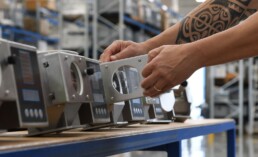
Vismec plastic mixing machines: features and advantages
In the plastic processing sector, plastic mixers play an important role: a homogeneous and constant mixing allows obtaining quality products. In this article, we will see how plastic mixing machines work and all the advantages of a good mixing process. Then we will present the features and advantages of Vismec horizontal mixers.
Mixing machines for plastic granules: how they work
Plastic mixing machine combine different types of plastic granules uniformly. These machines find application in various sectors, such as the production of plastic components for automotive, consumer electronics and packaging industries. The mixing process begins with the introduction of plastic granules into the mixer: once inside, the machine's rotating blades start to move, mixing the material. Plastic polymers usually melt and mix at high temperatures, so industrial plastic mixers are designed and built to operate at very high temperatures. The result of the mixing, as mentioned, must be as homogeneous as possible. And a uniform mix generates several advantages. Let’s see them all.
- Product quality. Good mixing preserves the physical and chemical properties of the finished product and makes them durable. Elements like strength, flexibility, and aesthetics can be affected by suboptimal mixing of plastic granules. This characteristic is especially important for technical, engineering and advanced sector applications, where the mechanical properties of plastic products must be consistent and predictable.
- Colour uniformity. If the plastic granules are not mixed uniformly, the colour of the final product may appear not uniform.
- Production process efficiency. The reduction of defects through a well-designed mixing process optimises production efficiency, decreases waste, scraps and returns, consequently reducing management costs.
- Moulding process stability. In injection or extrusion moulding process, that are two of the most common plastic processing methods, a preliminary homogeneous mixing of the plastic granules ensures a more stable melting and material distribution. This reduces process variations and improves product quality.
As we will see in the next paragraph, Vismec mixers have technical characteristics that allow for a qualitatively better mixing when compared to the solutions offered by competitors.
Vismec horizontal mixers: why to choose them
Vismec plastic mixing machines are a key element of the plastic granules dosing systems we design and produce.
What sets them apart is the mixing system, which is innovative, if compared to similar products available on the market. The material mixing flow occurs along the horizontal axis, unlike in the more common vertical mixers. Operatively, in horizontal mixers, the blades are positioned along a horizontal axis, allowing for a smoother and more continuous movement of the materials.
This type of mixing is particularly effective in ensuring that all granules are uniformly exposed to the blades, minimising accumulation zones, ensuring better heat distribution, and allowing for a more homogeneous mixing of the material, with the consequent advantages we listed earlier.
In terms of design and construction, the horizontal mixers produced by our company:
- have a stainless steel structure;
- withstand high temperatures, up to 200°C;
- work in three distinct operating modes: ON, with timer and externally enabled. The timer mode is adjustable.
- have a 6 languages LED graphic display that allows immediate visualisation of the operating status;
- allow for easy maintenance without supporting tools.
In addition, optional extras include wear-resistant mixing blades suitable for fiberglass materials, to broaden the application spectrum to the different needs of client companies.
Would you like to know more about the advantages Vismec horizontal plastic mixers can bring to your business? Contact our technical team: we will be happy to provide you with all the relevant specifications.
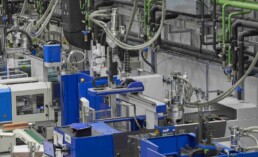
The new Vismec supervisor: better plant control with OPC UA protocol
Today, we are presenting one of the latest Vismec technological developments: the new supervisor integrated with the OPC UA protocol. Thanks to the introduction of Industry 4.0 elements, the device allows for better and more comprehensive plant monitoring. In this article, we will delve into what it is, outlining its purposes and general operating principles. Then, we will focus on the more technical aspects, highlighting the improvements offered over previous solutions.
The new Vismec supervisor with OPC UA protocol: why we have developed it
The aim of the new device is to enhance the control and monitoring the capabilities of the various components of the installed plants, as well as the interoperability of different machines. The project was developed to more effectively address certain organisational and operational needs, including the overall verification of plant operation, the visualisation of relevant data, and the identification of any anomalies. Thanks to the new supervisor, and in particular the presence of the OPC UA protocol, it is possible to:
- remotely verify the correct operation of plants and their components, allowing for more targeted interventions when necessary;
- manage access and permissions for each operator who administers, defines, or adjusts machine settings, based on their role and functions;
- improve the connection between the centralised Vismec control system and external software interacting with the machines within the production layout and management system.
The last function mentioned, for instance, can be useful for connecting the Vismec system with a management software used by a client company, through an interface that allows for the visualisation of selected variables of the installed machines. This innovation is made possible by the OPC UA Server added to the new supervisor.
At the core of these mechanisms is a paradigm shift that represents one of the most significant evolutions in the newly introduced supervisor. In fact, the device’s programming logic shifts from a functional approach to an object-oriented approach. What does it mean? To better understand it, we first need to define what a "software object" is.
A "software object" is a fundamental concept in object-oriented programming (OOP). This paradigm is based on the idea of organising computer code into "objects," understood as structures that combine data and functions, and that can be used to represent real-world entities or abstract concepts within a program.
Here are the key characteristics of a software object that help us understand the functioning of the new Vismec supervisor based on OPC UA protocols.
- Attributes (or features). These are variables that contain information about the object's state. For example, in an object representing a person, the attributes might include name, age, address, etc.
- Methods. These are functions associated with the object and define its behaviour. For example, a "person" object might have methods like "walk," "talk," "eat," etc.
- Encapsulation. Objects hide the details of their internal implementation from external users, allowing access only through so-called public methods. This principle helps protect data, a key function in OPC UA protocols, and reduce code complexity.
Thanks to programming according to this logic, the new supervisor allows software objects to interact with each other through message exchanges: for example, transferring data for processing and subsequently receiving the result of their processing. This mechanism translates into better interoperability between software, machinery and users, making plant monitoring more comprehensive and integrated.
Improvements over previous monitoring systems
After this technical-methodological overview, we now present in more detail the various functions of the device and the main differences compared to the systems previously used to control the granule conveying, drying, and dosing plants installed at client sites.
We want to focus particularly on the operational advantages that plastic processing companies can benefit from, thanks to the new supervisor. Here are the main ones:
- improved hardware;
- simplified graphics to immediately highlight the main variables to be monitored, related to each plant component;
- generalised evaluation of the state of each machine in the plant: not only abnormal states are monitored but also normal ones, each associated with a colour code;
- improved alarm system to precisely identify the presence of anomalies, link them to the machine that registered them, and provide additional information such as their location and the time they occurred;
- better interface connection between the centralised Vismec management system and the software used at the client’s site: we already discussed this aspect in the previous paragraph.
Our company is already working on further developments that will make the Vismec supervisor even more complete and integrated. Want to know how the new device can improve your company's performance in terms of organisation, monitoring, and intervention? Contact our team: we are at your disposal.
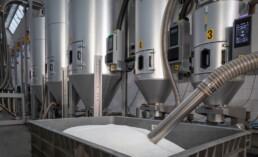
A Vismec case study: solutions to the problem of dust in plastic granules
The presence of dust in plastic granules used as raw material in injection moulding can become a significant problem, especially in the production of objects, elements and components that must be perfect in their appearance.
In this article, we are presenting a case study we faced recently.
The client's request: dust removal from plastic granules
The customer who asked for our intervention operates in the plastic processing sector and, specifically, in injection moulding. It is a well established company, with a machine park that includes around 50 presses
In addition to the development and production of moulds, the company also supports customers in the production and assembly of high-quality plastic components in the following sectors:
- domotics,
- medical,
- automotive,
- water treatment.
Regarding the topic of this case study, the company had to cope with a dust problem in plastic granules. The incident occurred during the production of an aesthetic component on behalf of a multinational company operating in the household appliances sector.
Following a problem in the production line, the plastic granule supplier often sent batches of material containing a high amount of dust to our moulding company. The dustiness of the raw granule led to a sharp increase in the percentage of rejected parts, due to inclusions and streaks affecting its aesthetic quality and precluding its use.
As mentioned at the beginning, the presence of dust in plastic granules used as raw material for injection moulding can negatively affect the aesthetic performance of the finished product in several different ways.
- Surface defects such as scratches, spots, or stains. These occur because the powder does not blend uniformly with the plastic material during the moulding process, creating imperfections on the product surface.
- Non-uniform colouring. Powder can affect the correct distribution of pigments or dyes in the plastic material. This can lead to colour variations or stains.
- Finishing problems. Dust in plastic granules can prevent a proper finish. For example, it can make it difficult to achieve a glossy surface or a specific texture, as the dust particles interfere with the surface structure during melting and solidification.
- Burn marks. During the moulding process, the powder may overheat, leaving dark or burnt traces, particularly evident on light-coloured or transparent objects.
- Inclusions and bubbles. The powder can trap air or other contaminants, creating inclusions or bubbles in the plastic material that are also visible on the surface.
- Increased roughness. Dust particles can increase the surface roughness of the finished product, affecting its appearance, touch and in some cases its functional properties.
To avoid situations such as those described, it is important that plastic granules are free of dust and other contaminants. However, as we will see in the next section, the machinery installed did not allow the company we are talking about to solve the dust problem.
The Vismec solution: a tailor-made dust removal plant
In fact, the feeders used by the moulding company and supplied by one of our competitors could not remove the dust from the granules. These feeders were installed all along the material handling cycle: some single-phase with a fabric filter and one three-phase with a ground cartridge filter.
The company tried to solve the problem manually by combining a sieve with a domestic hoover to remove dust from the virgin material before drying. Although this solution improved the situation, it failed in bringing the waste percentage below the required minimum values and resulted in significant loss of time for the operators.
Consequently, Vismec proposed to the customer a specially designed solution consisting of:
- a side channel blower, model VB 31, with a DR2 three-sector cyclone filter.
- a granule conveying management and control system with four QUAD stations and four VR4 material receivers.
With the supplied machinery, the customer created a material handling chain that includes:
BAG → STORAGE CONTAINER #1 → STORAGE CONTAINER #2 → DEHUMIDIFIER → PRESS
The organisation of such a supply chain has ensured an effective dust removal from the material and a drop in the incidence of waste to normal levels.
As you can see in this case study, Vismec technical and sales team works to offer clients the most effective response to the challenges they face. If your company is also looking for a partner to solve a problem or critical situation in your sector, contact us: we will study the best solution together with you.
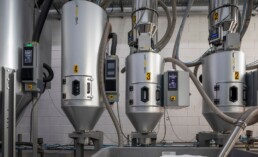
Dew point meter: why to use it
The dew point meter is a device for measuring and monitoring the dew point of the outgoing air in polymer dehumidification systems. These measurements help to ensure the effective dehumidification of plastic granules, ensuring the good quality of the finished product resulting from the plastics processing.
In this article we are going to have a closer look at what a dew point meter is and how it operates. Then we will present the features and advantages of dew point meters designed and manufactured by Vismec.
Dew point meter: what it is and how it works
When drying polymers, especially in the case of technical polymers, it is important to check the functionality and performance level of the drying system.
As we have already explained, residual moisture can be present in the granules used as a raw material for plastic processing, and it can generate serious flaws in the finished products, compromising their mechanical properties and aesthetic characteristics.
The dew point meter is a helpful tool to measure the dew point. Simply put, dew point is the temperature at which the air reaches saturation and water vapour condenses into liquid form. Consequently, in several industrial applications, knowing the dew point is useful to maintain optimal drying conditions, especially when handling moisture-sensitive materials such as plastic granules.
The operation of the dew point meter exploits precise physical principles and relies on several integrated technologies. The measuring process involves various steps. Let’s see them all.
- Temperature and humidity measurement. The various unit sensors detect the amount of water vapour present and the temperature of the air leaving the dehumidifier at a specific time.
- Dew point calculation. Using specific formulas and algorithms, the tool calculates the temperature at which the moisture in the air condenses, that is, the dew point.
- Data visualisation. The data are shown on a digital display to allow real-time monitoring.
- Process control. The most advanced dew point meters integrate into industrial process control systems, allowing automatic settings to maintain optimal dehumidification conditions.
As we said at the beginning, measuring the dew point value allows monitoring the performance of the drying system. This value can be checked in the following ways.
- Under working conditions. In this case, the dehumidifier works regularly, as part of a real drying process of the plastic granules. The measurements taken allow controlling both the efficiency of the dehumidifier and the effectiveness of the drying process.
- Vacuum, to check the efficiency of the dehumidifier only.
But a single measurement is not enough for a complete check. It is necessary to measure over an extended period of time to define the humidity trend over several hours, sometimes several days.
Furthermore, the type of dehumidifier influences the duration of the measurement considerably. With VISMEC dehumidifiers, control is simple, because our machines operate smoothly and consistently: as a result, the measurement quickly shows the true dew point value, and it will not deteriorate with time.
Vismec portable dew point meter
A Vismec portable dew point meter can be used with the different types of dehumidifiers that our company designs and manufactures. Available with various power systems, it ensures versatility and ease of reading.
The logger plotted on the screen has an adjustable width and allows viewing the trend of the parameters over a desired, longer or shorter period of time. It is also possible to save the collected data on a USB flash drive for various uses: for example, documents filing in accordance with the company's quality management system.
Listed below, the main technical characteristics of the dew point meter offered by our company:
- device equipped with an integrated volumetric suction pump to ensure a correct and constant sampling flow;
- connection to the dehumidifier via Teflon monotube;
- great versatility, that is, the portable dew point meter is also suitable for small or pneumatic dehumidifiers;
- large 7’ touchscreen that makes it easy to read the data, thanks to its sharpness and illumination;
- available in rechargeable battery-powered version with integrated battery charger, or without batteries with direct power supply;
- user-friendly graphic user interface in six languages;
- settable dew point limit and sampling rate;
- data collection record with possible on-screen verification;
- USB port for downloading data and software updates;
- total auto switch-off in case of low batteries and “battery safe” system to keep them efficient.
Effective plastic granule drying is crucial to ensure quality to the products your plastics processing company offers. In this context, Vismec portable dew point meter is a reliable, advanced and functional device that allows an accurate monitoring of the performance of installed dehumidifiers.
Want to know more? Contact our team.

Vismec at PLASTPOL 2024, plastics and rubber processing trade fair in Kielce, Poland
From 21 to 24 May 2024, Vismec is exhibiting at PLASTPOL 2024, the international plastics and rubber processing exhibition in Kielce, Poland.
PLASTPOL Expo is Central and Eastern Europe's most important event for the industry. Six hundred companies from all over the world will present their innovative solutions for the plastics industry.
Vismec will be present at the event at the stand of our Polish partner Kanitec. Come and visit us: we are waiting for you at HALL E, STAND E25 - E26.

Vismec at FIP 2024, the international showcase in the plastics industry in Lyon
From 4 to 7 June 2024 Vismec will be at FIP - France Innovation Plasturgie: the event will be held in Lyon, France.
The trade fair is one of the most important international showcases for companies in the plastics industry.
This year, the focus will be on the sector's energy, regulatory and environmental challenges: an opportunity to highlight the advanced energy-efficient solutions that our company offers.
Visit us at the Eurexpo complex in Lyon: we look forward to seeing you at stand 105-H32.

Big bag emptying stations for industrial granule storage: Vismec solutions
In this article, we are going to introduce big bag emptying devices used in the industrial storage of granular materials.We will start by explaining what a big bag emptier is and what its function is. Then, we will focus on the role of these devices in the transport and storage of plastic granules, and we will present Viper, the latest solution by Vismec in this sector.
Big bag emptying solutions: what they are and what they are used for
Big bag emptier series are equipment that companies use in operations involving the transfer and industrial storage of bulk materials, such as plastic granules. But what structure do these devices have, and how do they work?
A big bag emptier, as its name suggests, is a machine designed to efficiently empty flexible containers commonly known as “big bags”. These are precisely large containers companies use for storing powders, granules or more compact materials.
Keep their contents safe and controlled is important, especially in industries that require the transfer of large quantities of bulk material. The plastics processing industry is among the sectors needing this care, in which it is essential to properly store, handle and transfer plastic granules during the production process. Here the big bag unloaders come into play.
The operation of the big bag emptier is based on a mechanism that allows lifting the big bag and empty its contents in a controlled way. This process takes place through the use of conveying systems that regulate the flow of the granules, ensuring an accurate and waste-free transfer.
The careful design of the big-bag emptying stations allows their structure and operating mechanisms to the specific needs of the companies. Vismec manufactures the big bag emptying stations according to these criteria, to ensure an efficient operation and optimal material management, as well as maximum flexibility.
In the next section, we will go further into the operation of big bag emptying stations for the storage of plastic granules. We will look at the main elements of these devices and present Viper, our company's latest solution.
Big bag emptying stations in the storage of plastic granules
Big bag emptying stations consist of several components that work together to perform the emptying process accurately and safely. Here are the main ones.
- Lifting and support system designed to lift the big bag into a vertical position.
- The big bag is placed on a stable support platform equipped with locking devices to ensure that it remains firmly in place during the emptying process.
- Opening and unloading system to open the bottom or neck of the big bag in a controlled way, allowing the plastic granules to flow evenly and regulated to the conveyor system below. Different technologies used to open the big bag include cutting devices, butterfly valve systems controlled by electric or pneumatic motors.
- Conveying system that regulates the movement of plastic granules from the big bag to the desired destination points, which may include feed hoppers or other transfer units.
All these features are particularly advanced in Viper, Vismec new big bag emptying device. Viper is designed and manufactured to empty big bags, boxes or Octabin containers. It can be used to handle solid plastic material in the form of granules with a size of about 2 / 5 mm.
Here are its main technical features:
- fixed painted carbon steel gantry-shaped frame;
- carbon steel mobile carriage;
- stainless steel moving probe to detect the material level in the big bag;
- stainless steel vacuum pipe to activate the plastic granules pneumatic conveying process.

Viper allows big bags or Octabin containers to be emptied automatically, thanks to a vacuum unit consisting of a receiver and a vacuum generator, connected to the vacuum inlet pipe itself.
The machine is designed to empty containers with a capacity of 1500 kg or more, of variable shape and size. Thanks to proper customisations and special probes, upon request, Viper can also be used to handle other types of solid materials such as regrind or powders.
During the conveying process, it is essential to monitor the granule flow to avoid overloads or interruptions. That’s why the parameter regulation is very important to ensure an efficient performance and must be carried out at any change of materials, containers and bags.
This is why the Viper big bag emptying station is equipped with a PLC control system that allows you to control and modify the operation settings without stopping the machine. Controllable elements include, for example, the settings of mobile carriage parameters, probe parameters, activation of the automatic vibrator.
Therefore, choosing Vismec big bag emptiers means having access to machines that can be precisely controlled, ensuring that operations are managed efficiently, saving time and avoiding downtime and material waste.
Want to know more? Contact our staff.